
Why guttering is the whole game
People choose a patio roof by looking at it. It fails, or doesn't, based on something you can barely see: where the water goes. A Highveld storm doesn't deliver rain gradually — it dumps it, often sideways, sometimes with hail. A roof that sheds all of that over one edge onto your paving has technically kept you dry and practically ruined the space.
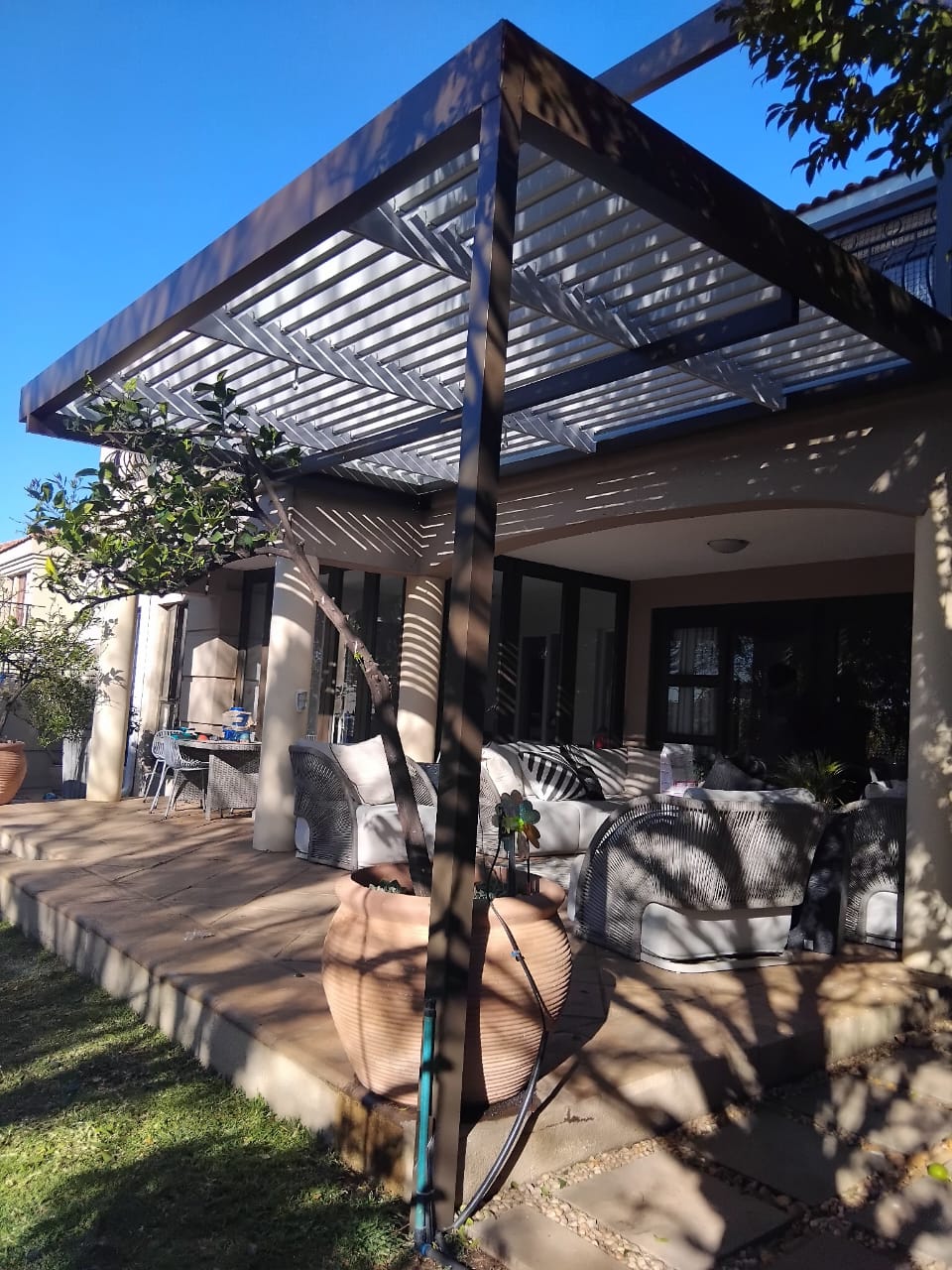
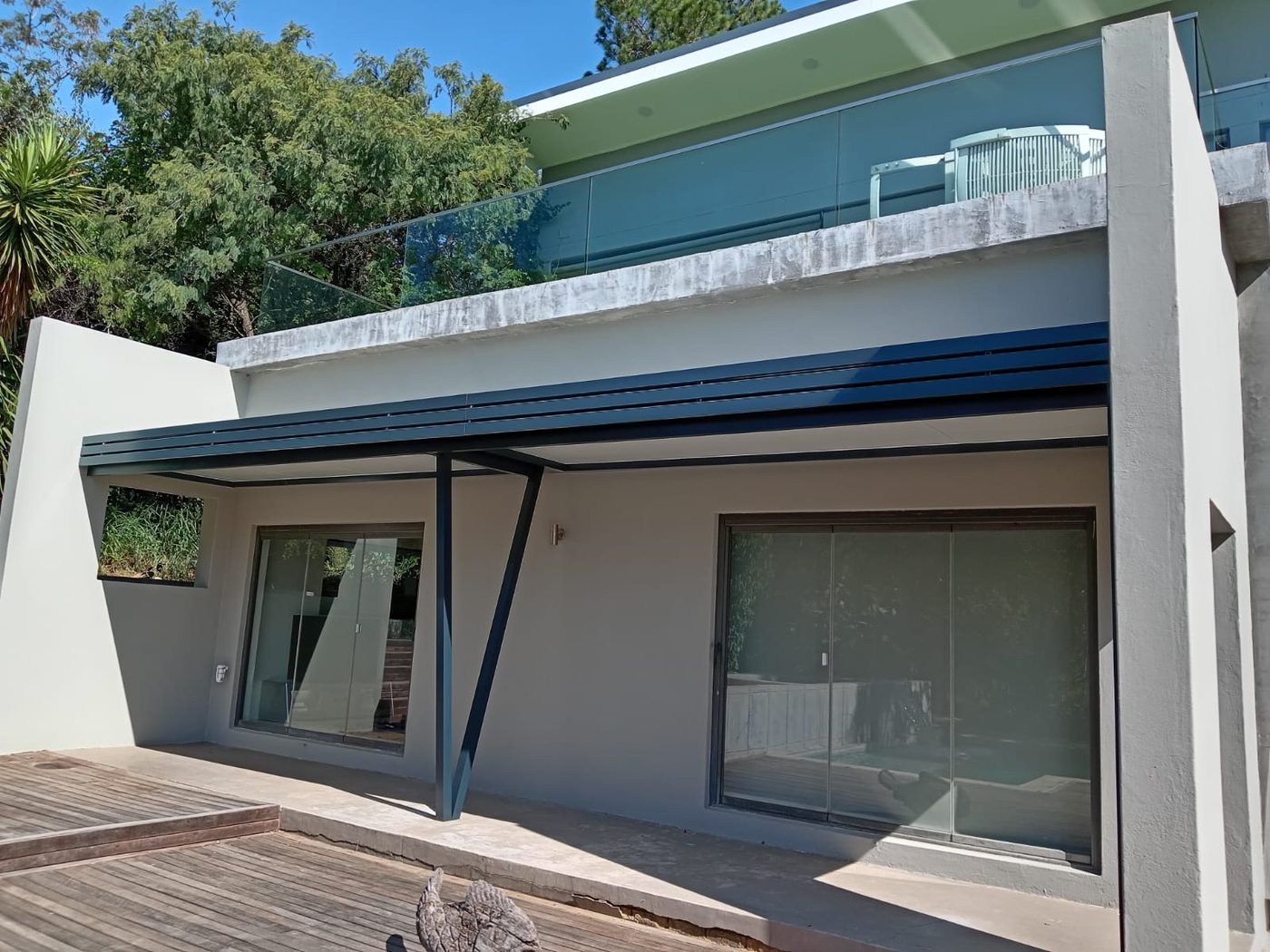
Every awning we build carries a full all-round gutter system with multiple downpipe outlets. All-round matters because storm rain doesn't respect the fall of your roof. Multiple outlets matter because it lets us route water to suit your existing stormwater rather than the shortest path — which on a double-storey home is often the difference between a tidy installation and a pipe down the middle of a wall.
Why we say 95%, not 100%
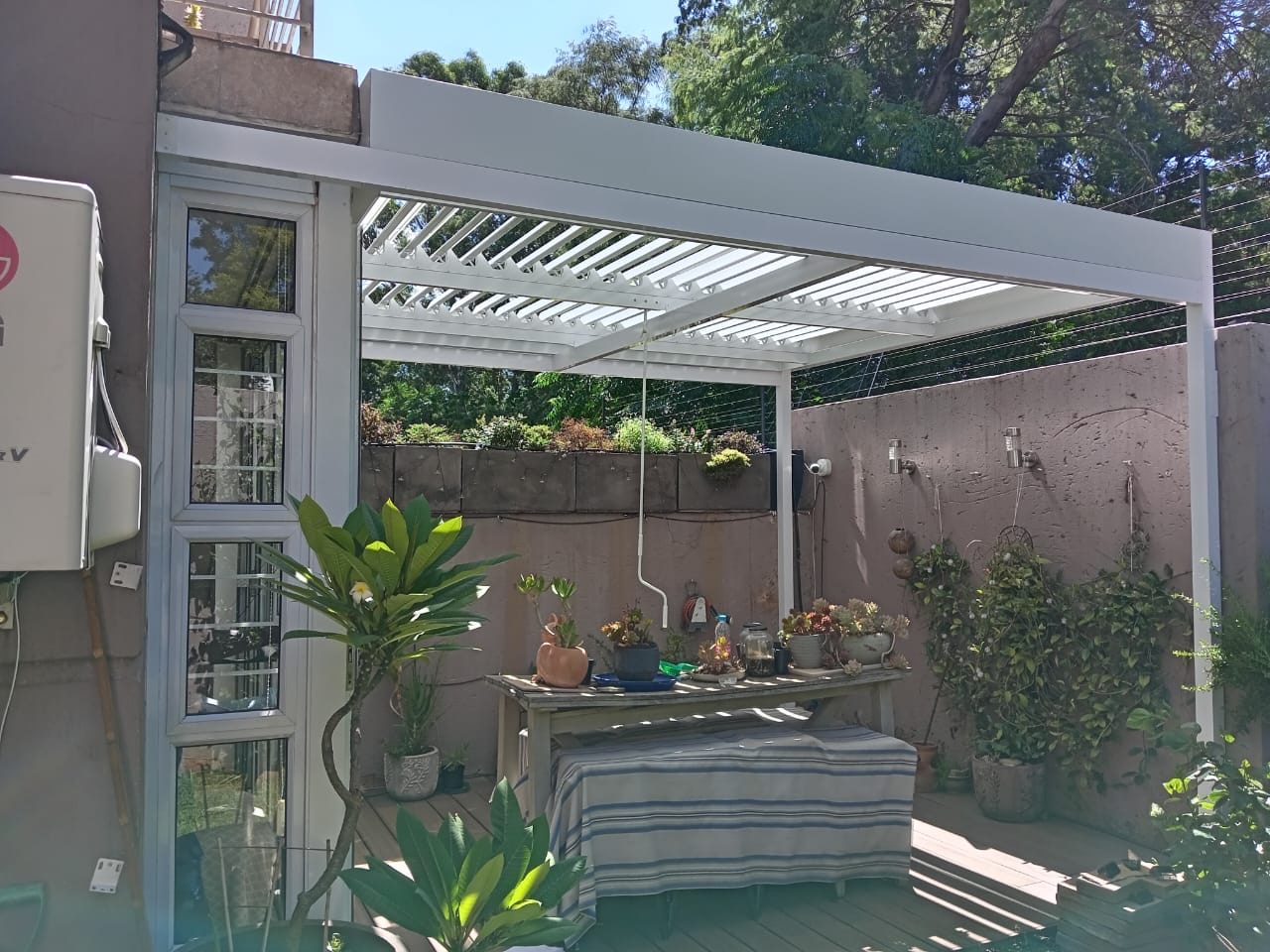
Because 100% would not be true, and you'd find out during the first real storm. An adjustable louvre roof is made of moving blades. Closed, they seal against each other and the system is 95% watertight — enough that you stay on the patio through a Highveld downpour. But it is a louvre roof, not a slab, and in wind-driven rain a small amount can find its way through the blade line.
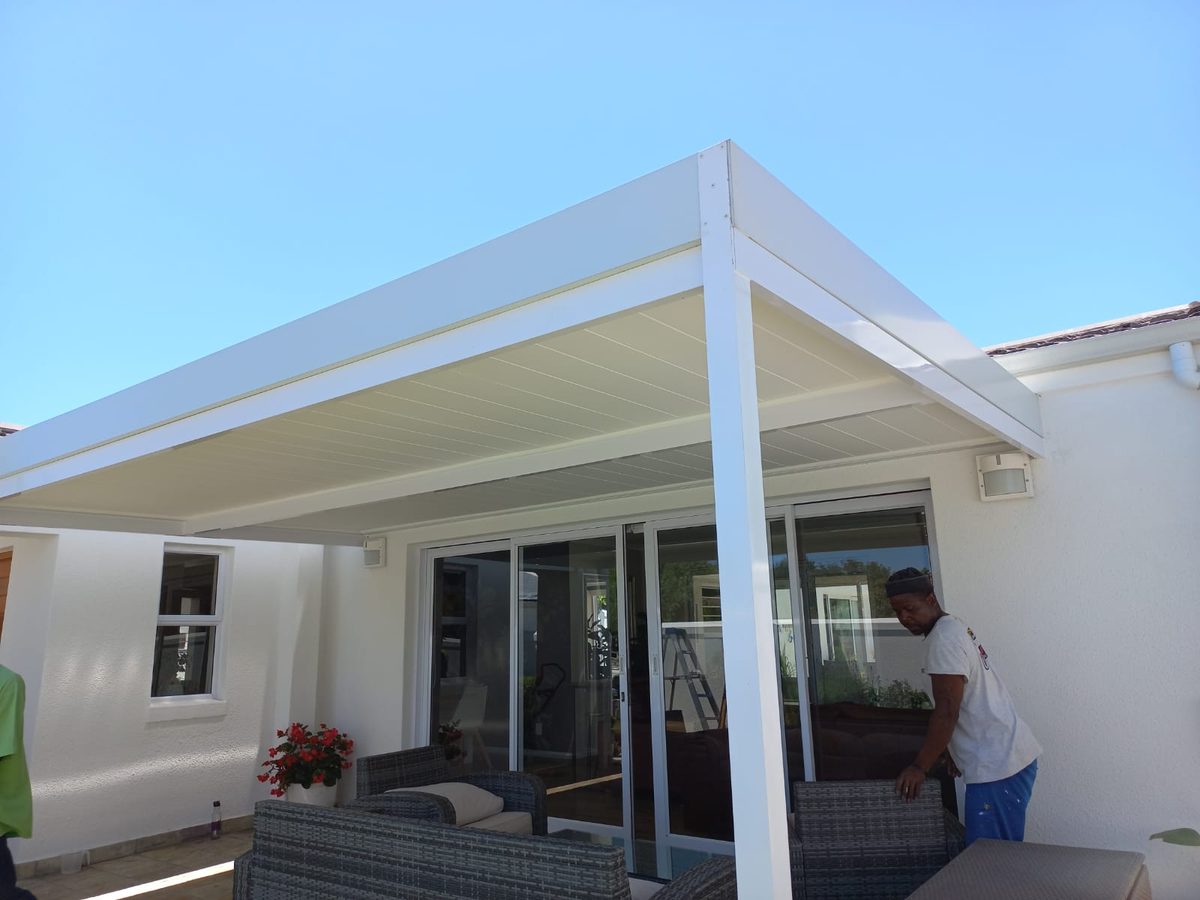
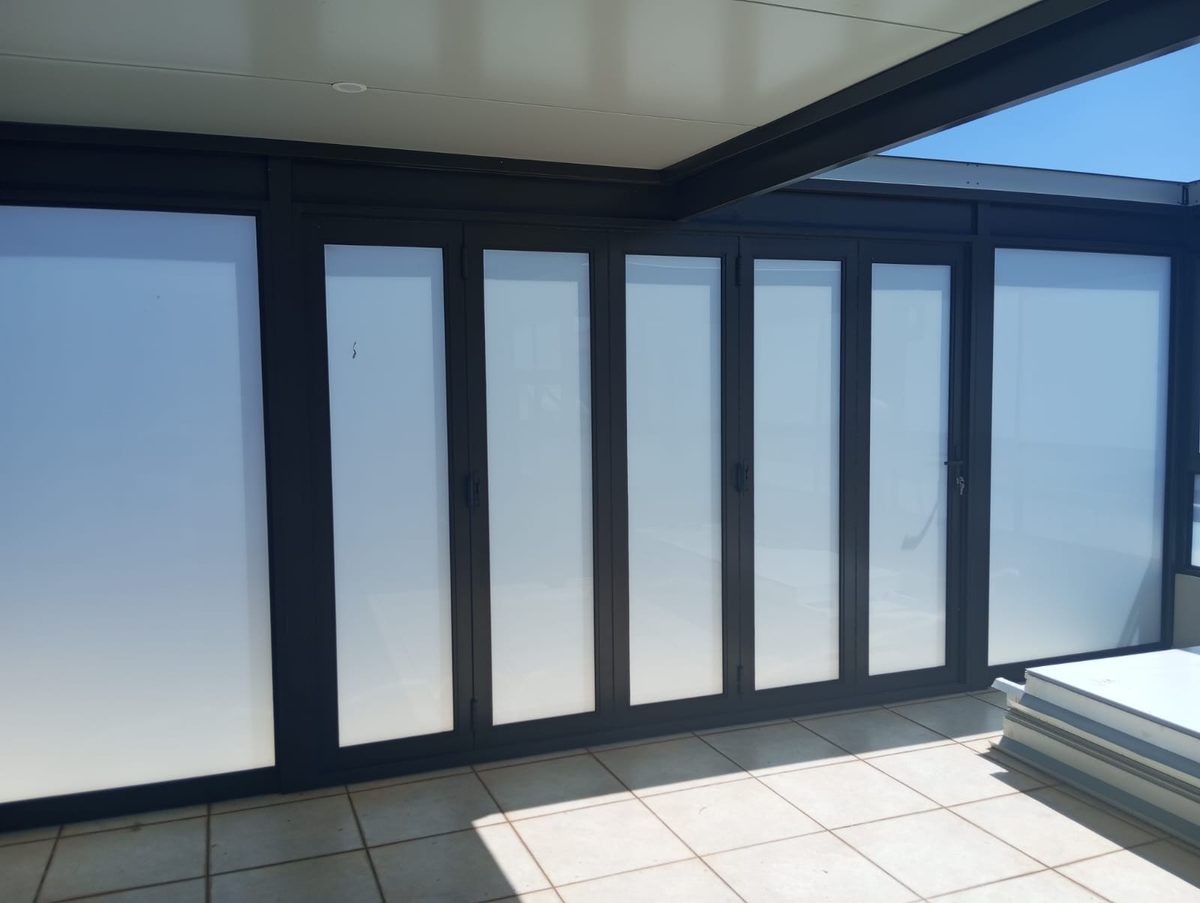
If you need genuinely sealed, that's a different product, and we'd rather tell you that up front: an insulated patio ceiling with double-roof rain protection is the fully closed option. The trade is that you no longer get to open the sky.
Hail
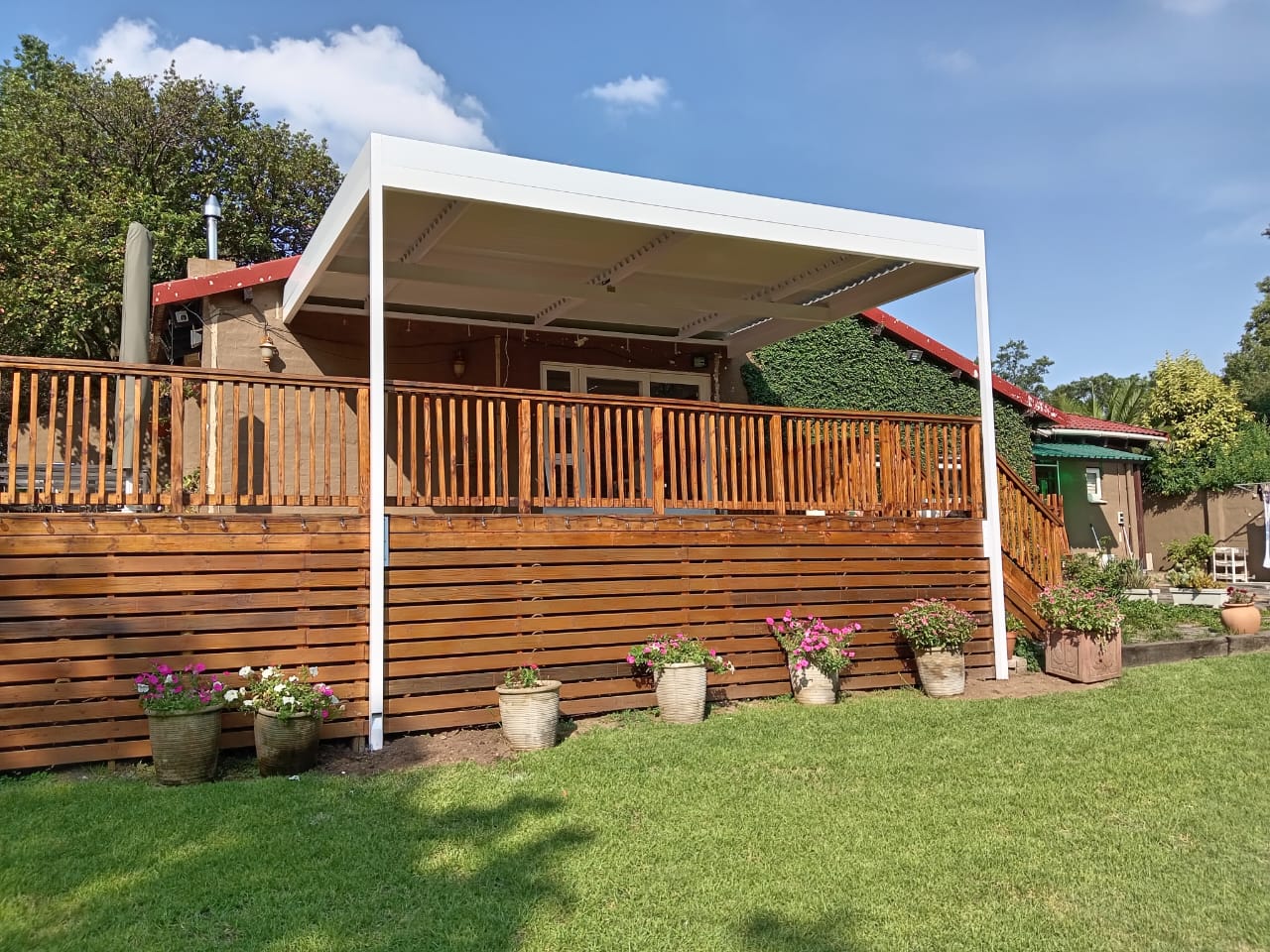
Gauteng hail is a real design consideration, not a footnote. Aluminium handles it: it doesn't rust, and every system carries a 15-year guarantee. Where clients ask about polycarbonate for light, we specify solar-control sheets on Fixed IBR systems with that exposure in mind.
The maintenance that actually matters
- Clear gutters and check downpipe outlets before the rainy season starts — this is the one job that matters
- Watch for leaf build-up if the patio sits under mature trees
- Rinse blades and sheeting when you clean windows
- After a big storm, glance at the outlets rather than the roof
Getting it specified properly
When you send a photo of your area with rough width, projection and height, mention two extra things: where your existing downpipes and stormwater run, and whether the patio sits under trees. Both change how we specify guttering. Every measurement is confirmed on site before manufacture — partly to get the dimensions right, and partly to see where the water needs to go.